Types of Hybrid Drives
In order to decide which type of hybrid drive is suitable for the individual application and to find the best possible technological solution in terms of performance, design and efficiency, it is crucial to carry out a preliminary study and an analysis of the operating parameters. This is our team's favorite work.
There are basically two types of hybrid drives for all kind of vessels:
Advantages:
The first advantage of a serial hybrid propulsion system is offering significant flexibility to the propulsion system, optimizing the diesel engines’ performance, improving their efficiency. This flexibility is due to the complete separation between energy sources and users, allowing for more efficient energy management. Providing greater independence to the primary power source, the diesel engine, mechanically decoupling it from the propulsion line, also contributes to a higher level of comfort on board, significantly reducing noise and vibrations.
Disadvantages:
However, adopting this type of propulsion has a considerable impact on the overall vessel cost: The more complex the system, the higher the level of design required to make it as complete and efficient as possible, and in line with the vessel‘s needs and requirements. The initial investment will thus be higher compared to traditional propulsion. On the other hand, retrofitting a traditional propulsion with a hybrid one is a brilliant example of applying circular economy principles, reusing everything possible already installed on board, integrating it into the new design, thus is reducing the environmental impact and making it even more sustainable.
Advantages:
Compactness and lightness are perfect for limited spaces, the robustness and reliability of the system ensure consistent performance over time. Thanks to modularity, obtained through the standardization of hybrid components, and advanced electrical design safety, compliant with the highest industrial standards, an additional safety level is added. Customization allows for tailor-made solutions, combining diesel engines of various powers with electric motors suitable for the specific needs of the project and customer; package‘s flexibility makes it ideal for both, pleasure and commercial vessels.
Disadvantages:
On the other hand, the parallel configuration (with “secondary shaft”) is characterized by greater flexibility in managing the reduction ratio between the electric machine and the propeller shaft, optimizing the propulsion system‘s efficiency. Such a configuration will consequently have a greater overall weight, due to the use of an additional mechanical transmission, as well as an electric motor. This affects both, the vessel‘s fuel consumption and requires more installation space. Parallel hybrid is the most common choice for medium-small units, where the available space is limited, annual operating hours rarely reach high values (5,000 hours), and comfort and relaxation are the user’s priorities.
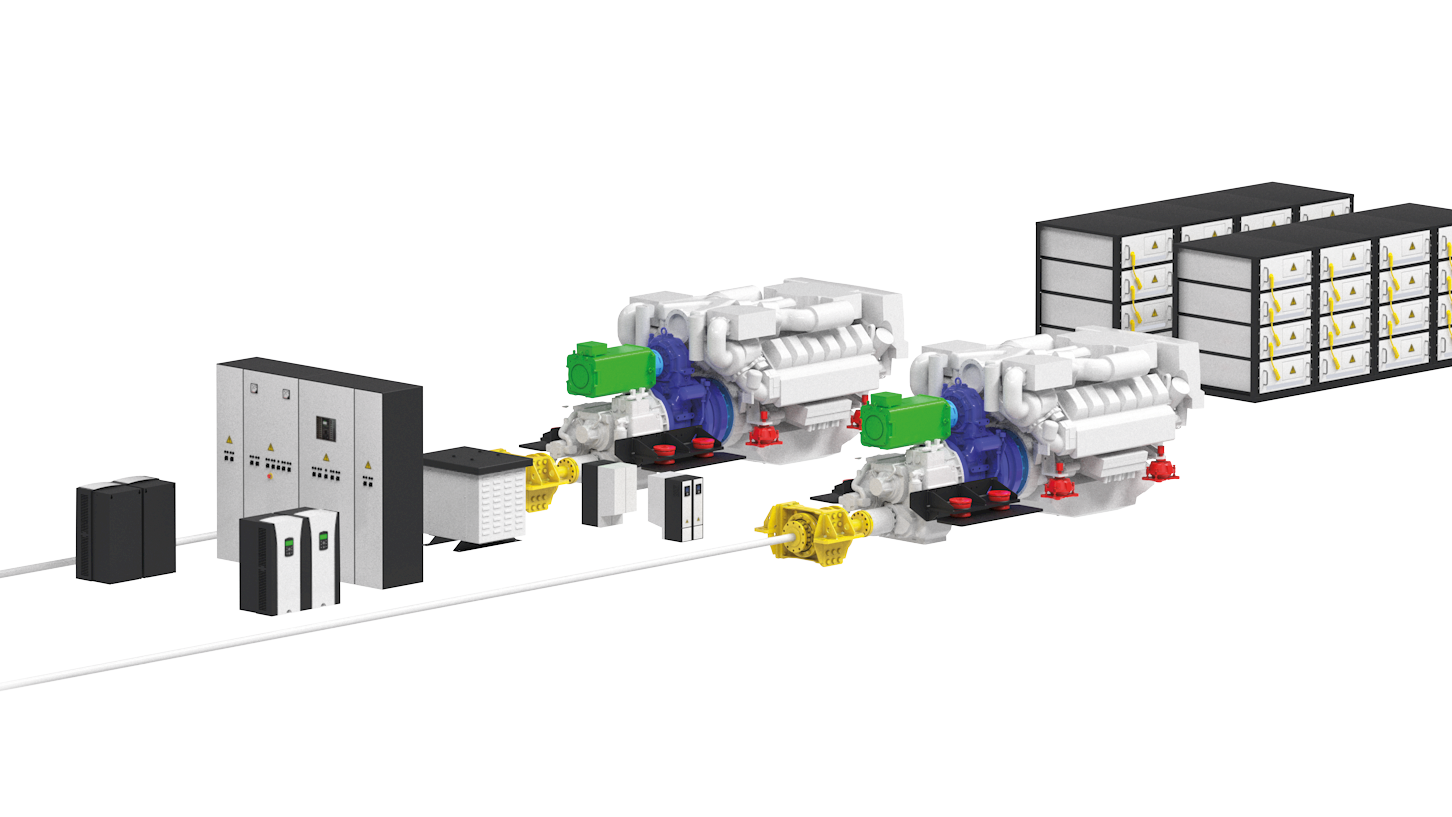
Hybrid Solutions for All Kind of Vessels
VULKAN’s flexible couplings and mounts are used on nearly all types of ships with diesel mechanic, hybrid or electric driveconcepts. All type of vessels can benefit from the outstanding dynamic properties and the long product lifetime of VULKAN products made in one of our production locations.
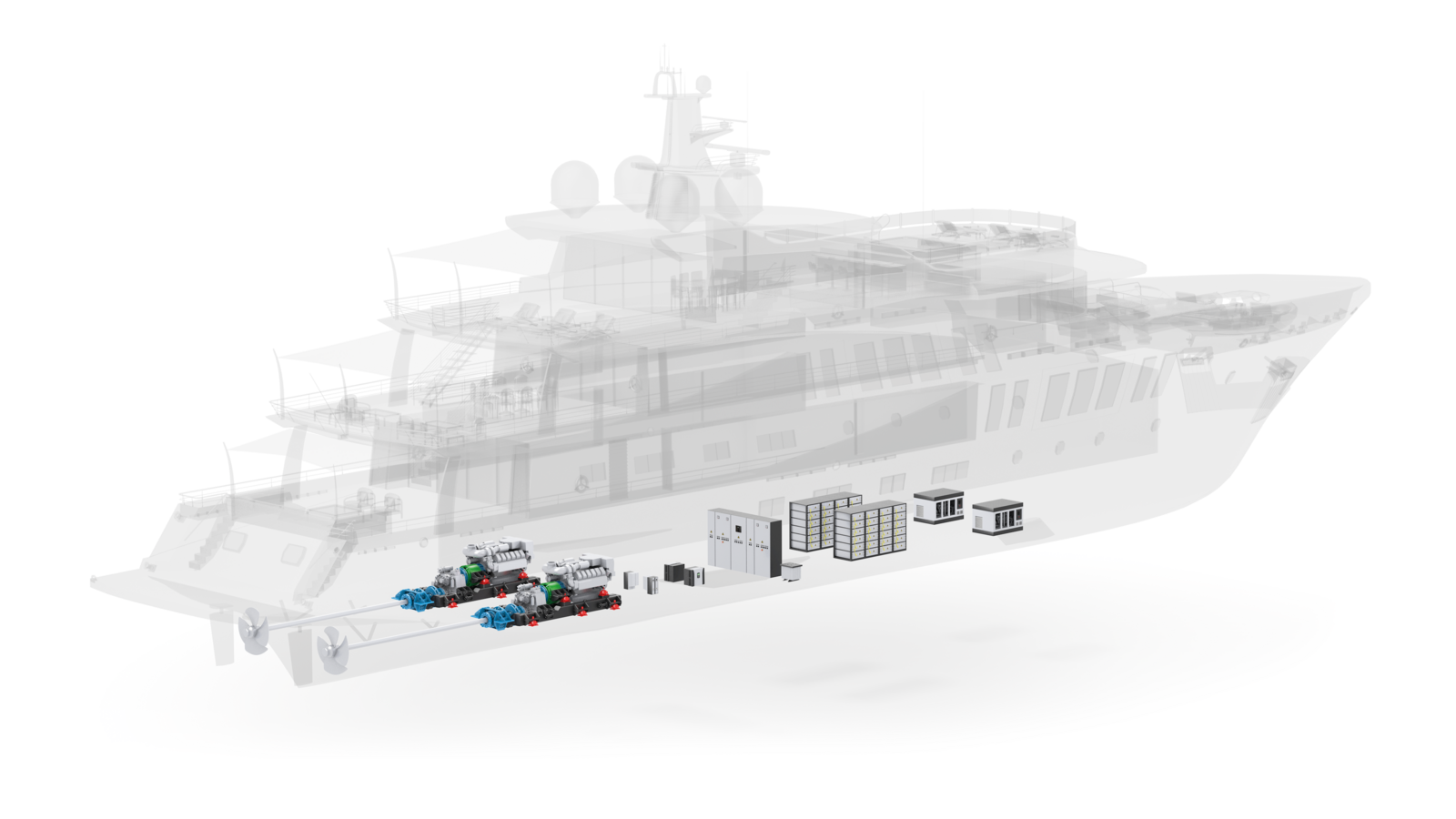
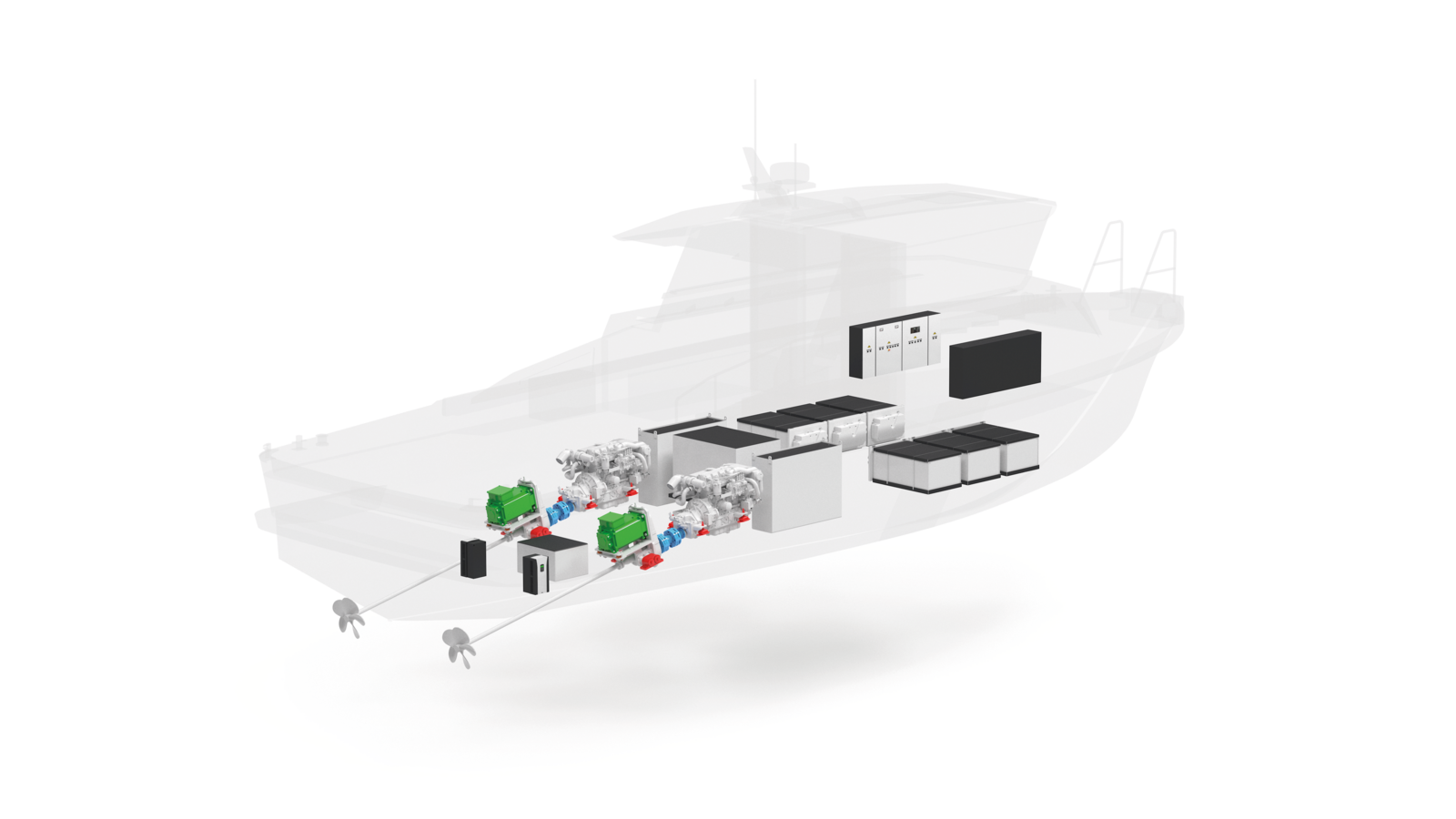
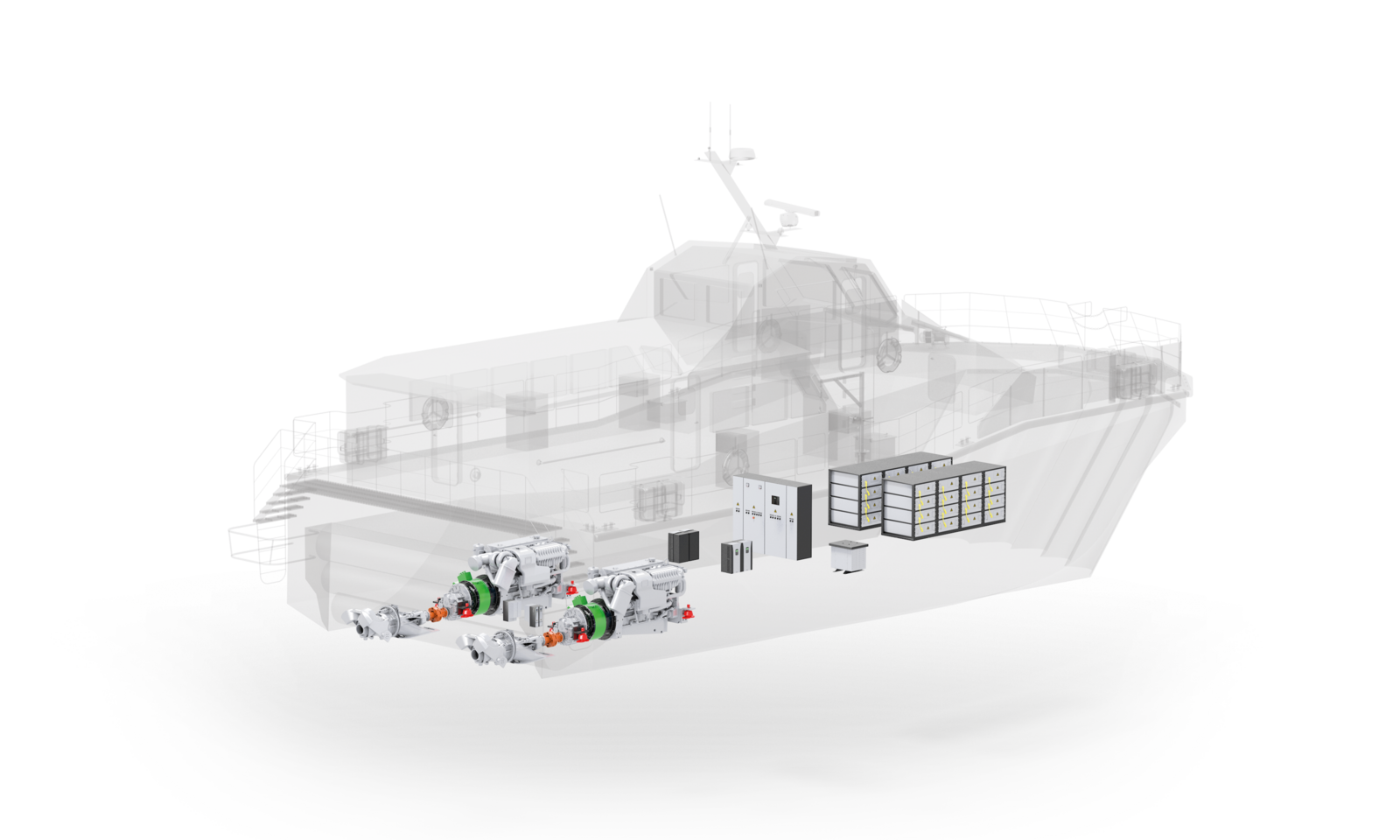
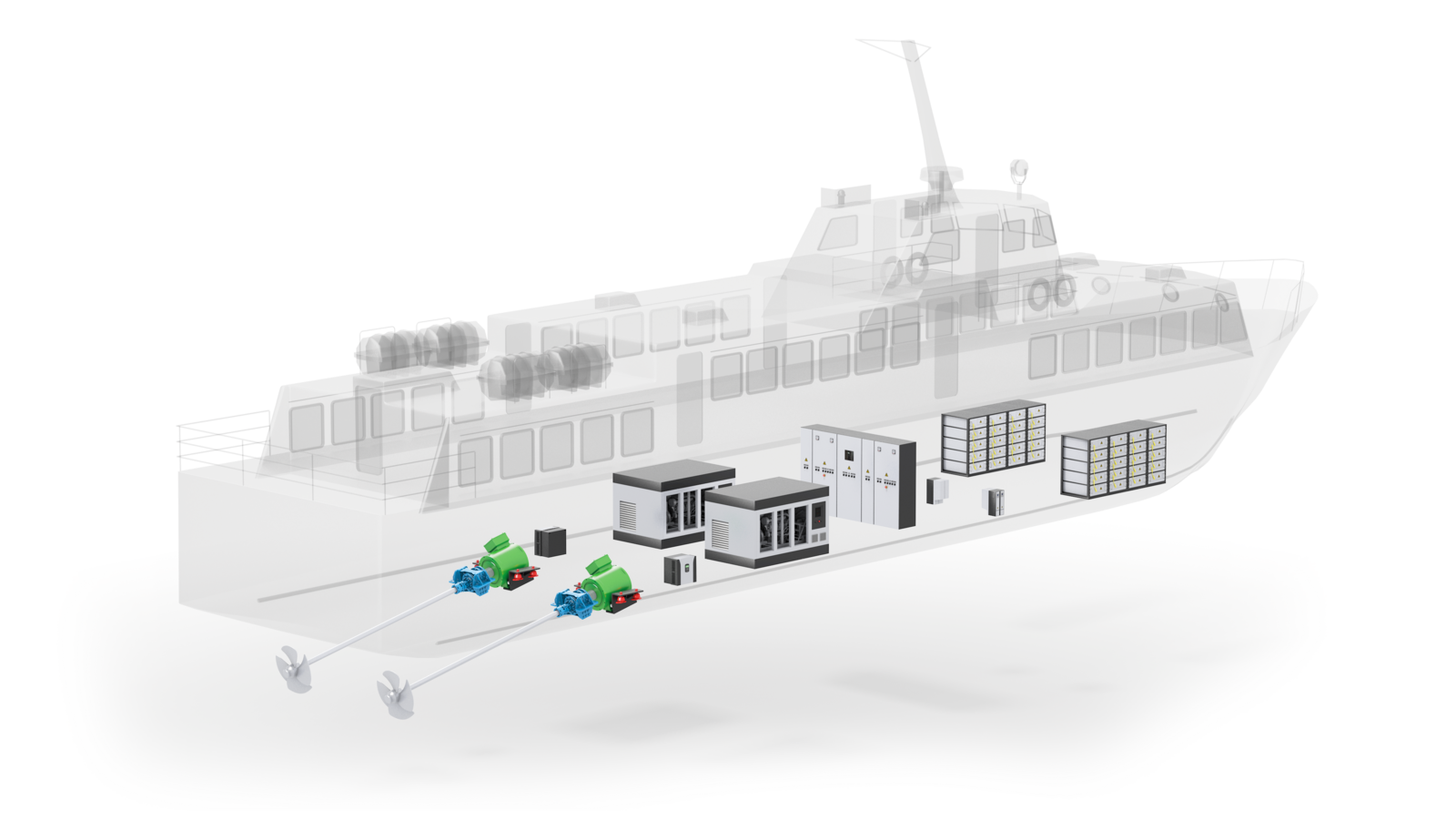
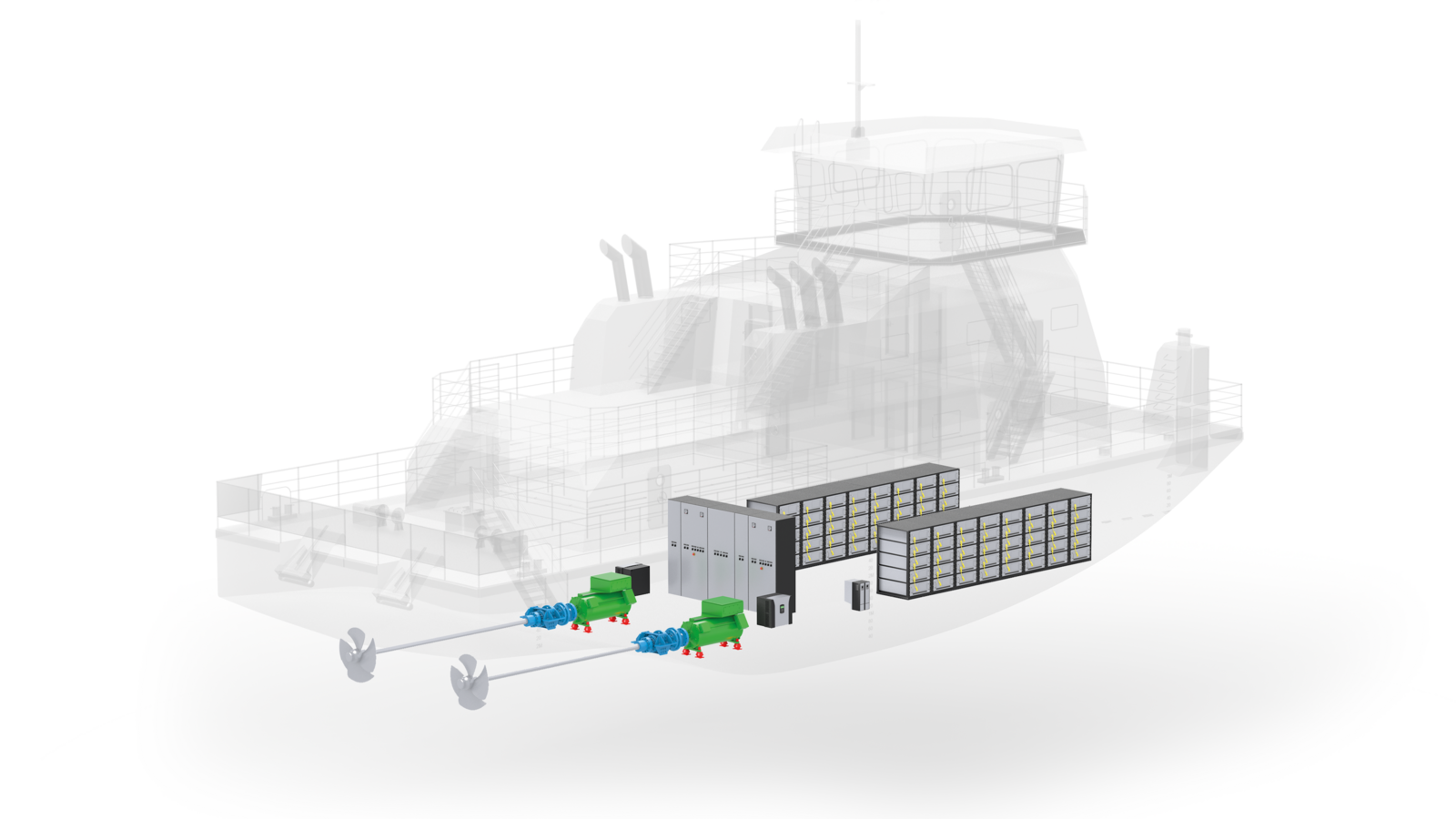

VULKAN Products by Hybrid and Electric Drive Solution
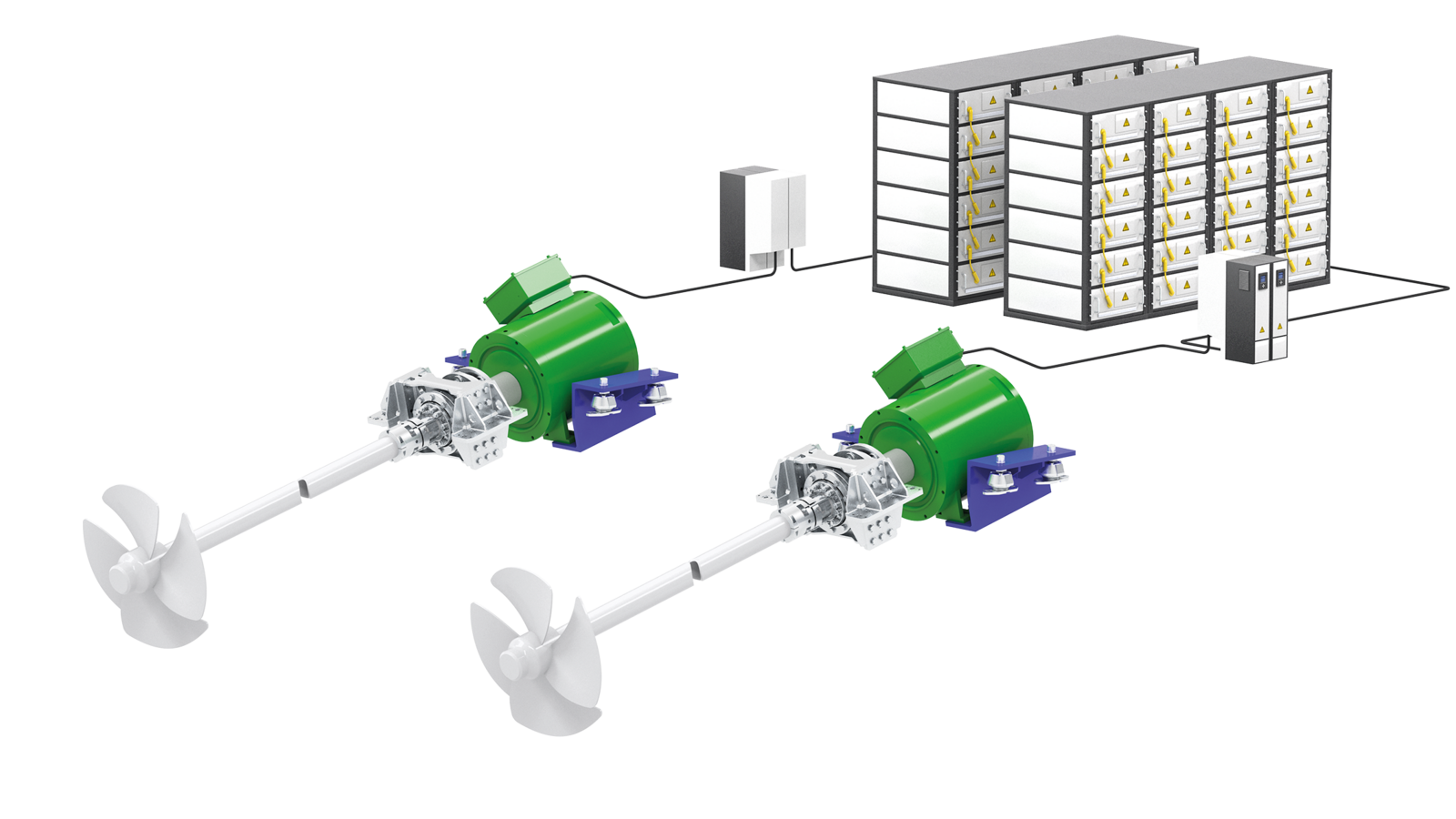
As part of our activities in the area of Hybrid and Electric Solutions VULKAN offers a dedicated product design and supply for sustainable drive systems. MEGIFLEX B, ChockDesign and AVR resilient mounts are used in the following example drive.
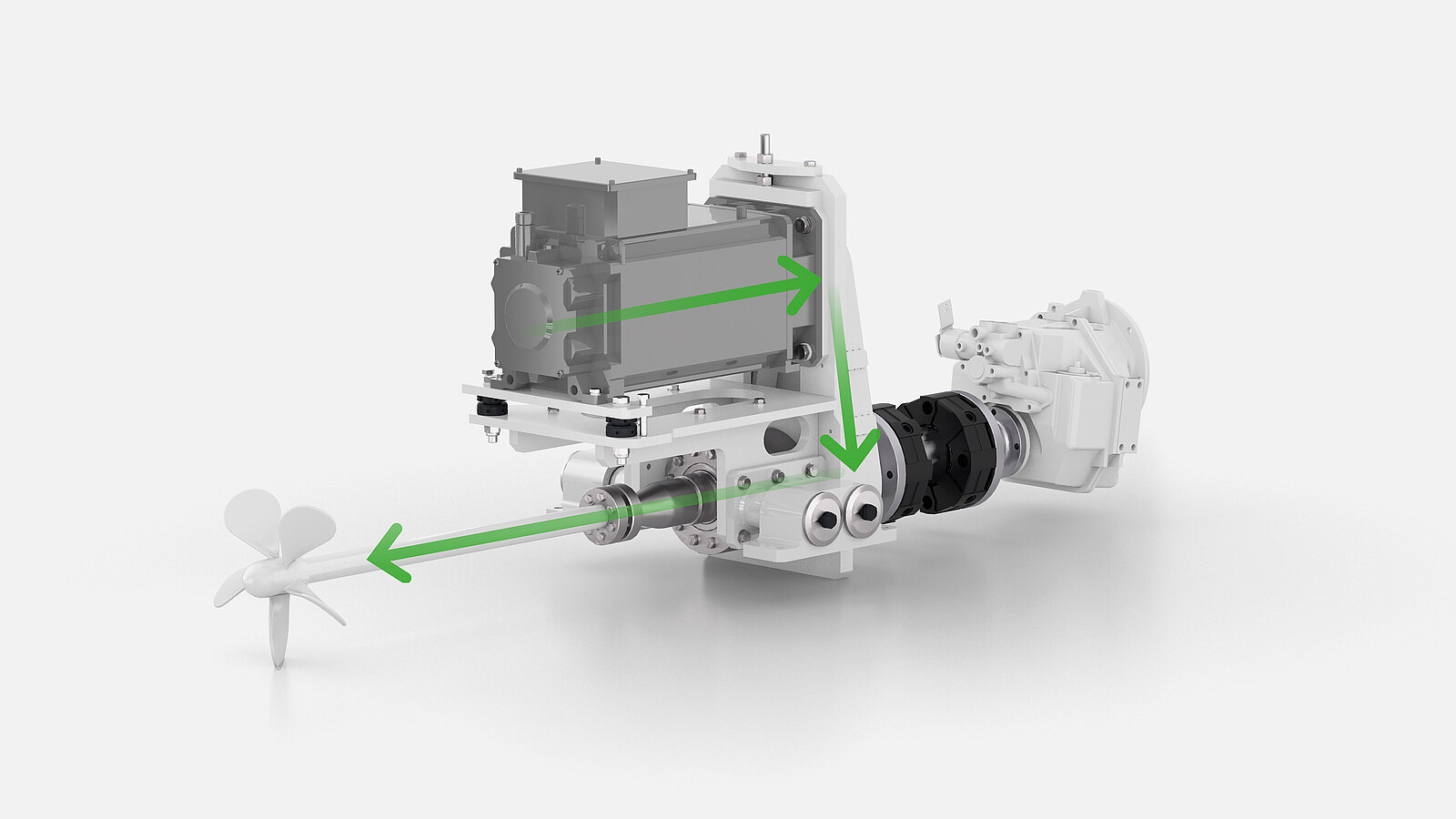
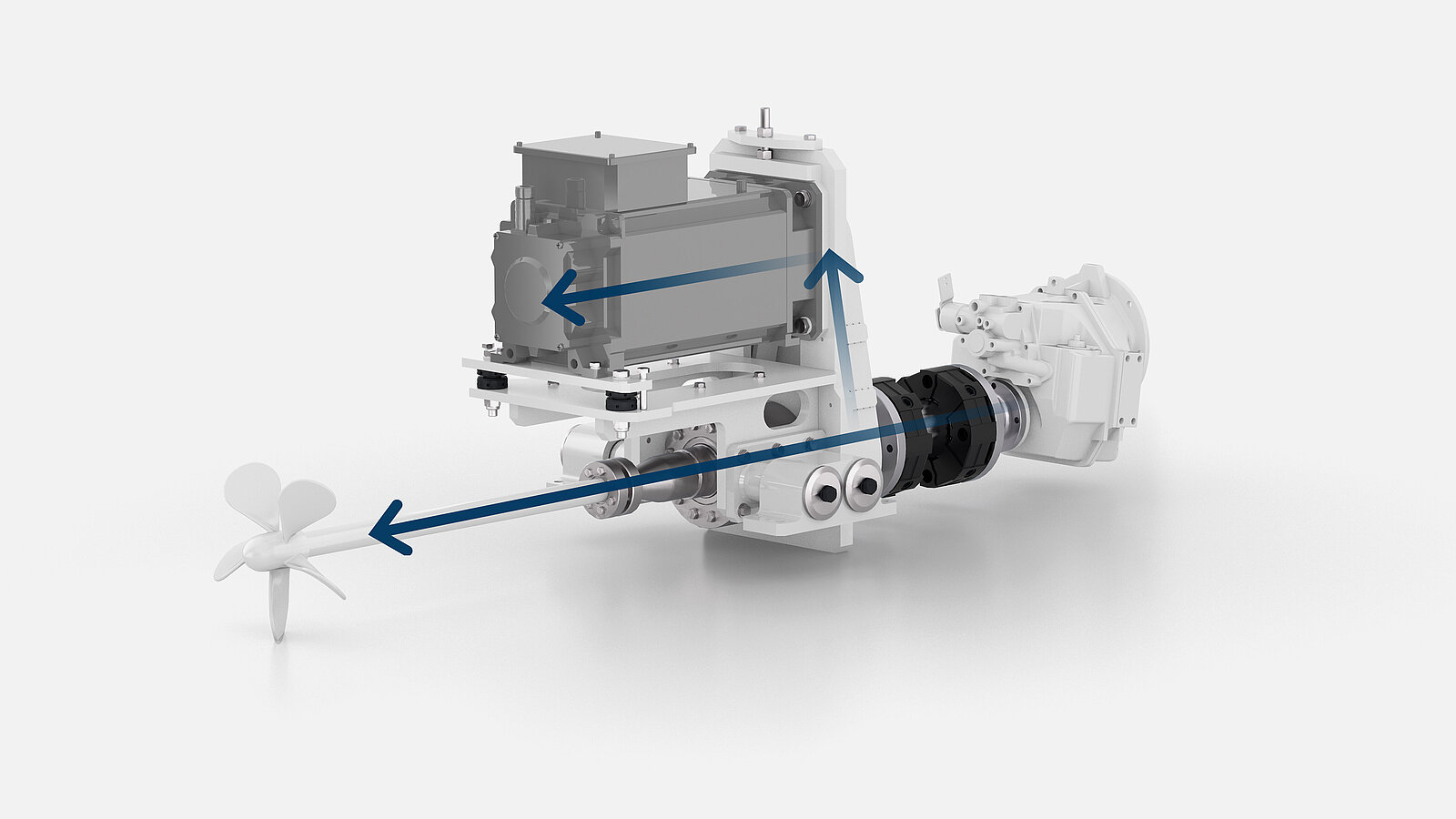
Diesel Mode ON – POWER GENERATION
Selecting the diesel mode button, the marine gearbox will engage the forward. The propulsion will turn in a standard diesel driven propulsion. In this navigation mode the e-machine can be used as a shaft generator to feed the onboard electric demand and/or recharge batteries.
H Series
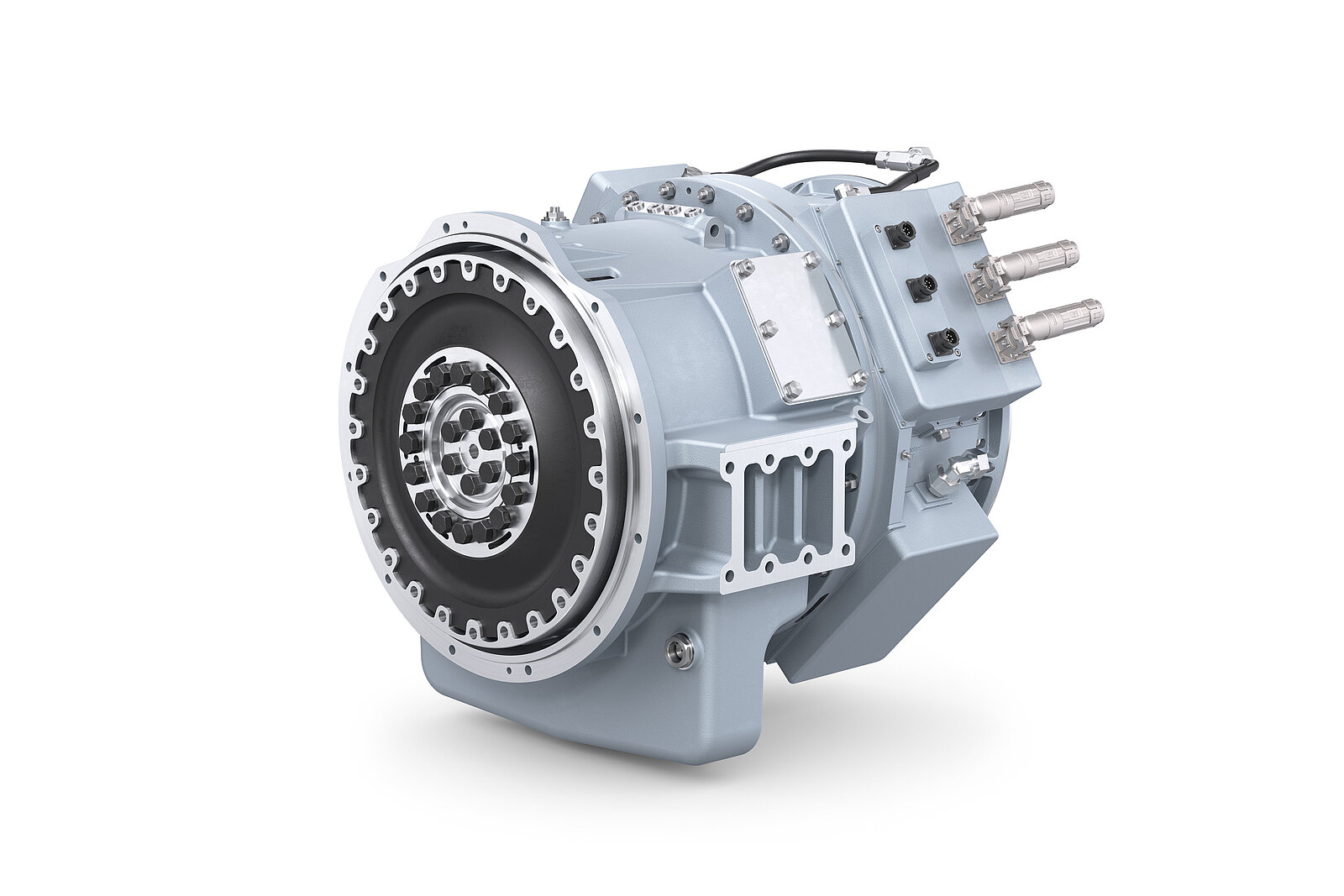
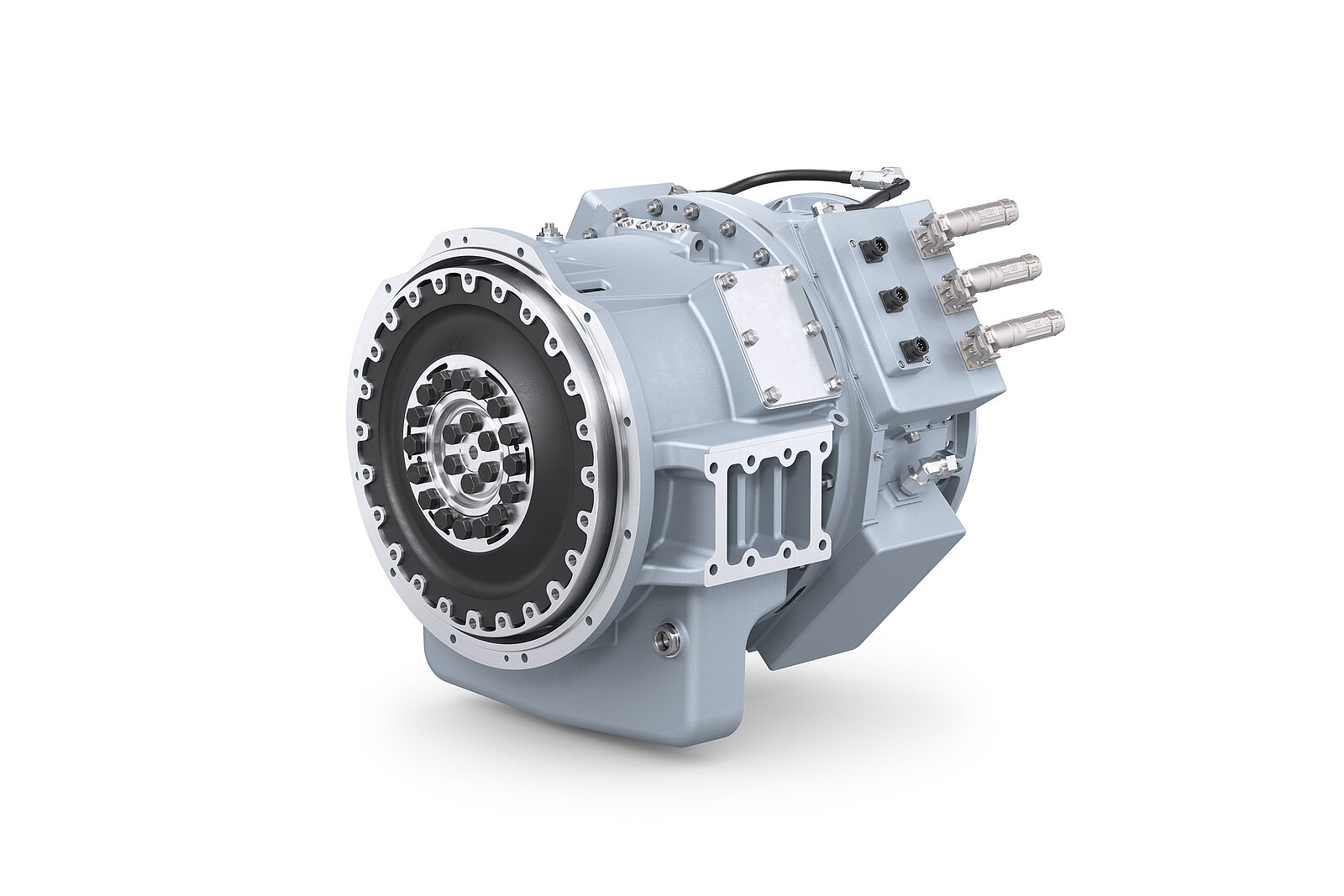
The H-Series has been designed to provide a fully integrated system made of mechanical and power management packages.
The H-Series hybrid module is supplied with all the components required for hybrid propulsion, ensuring superior quality and reliability compared to a conventional propulsion system.
VULKAN provides the mechanical interfaces specially selected by means of rigid-body dynamic analysis and torsional vibration analysis. Its compactness makes it suitable for machine rooms with limited space, while its robustness and modularity ensure stable performance over time and ease of customization to meet specific project and customer requirements.
The system is particularly suitable for both, new builds and retrofits of vessels already in service. The design objective behind the product, aimed at optimizing space and weight, allows the advantages of hybrid propulsion to be exploited without the need for significant structural modifications.
Besides H-Series hybrid module package, VULKAN offers its customers a complete turnkey package which includes the following components and their integration:
Power distribution and management system:
- PMS/SEMS control panel
- Throttle Lever System
- Battery pack
- DC/DC converter
- 750 VDC switchboard
- Transformer
- Inverter panel (VFD)
Drivetrain package:
- Highly flexible coupling
- Electromagnetic coupling
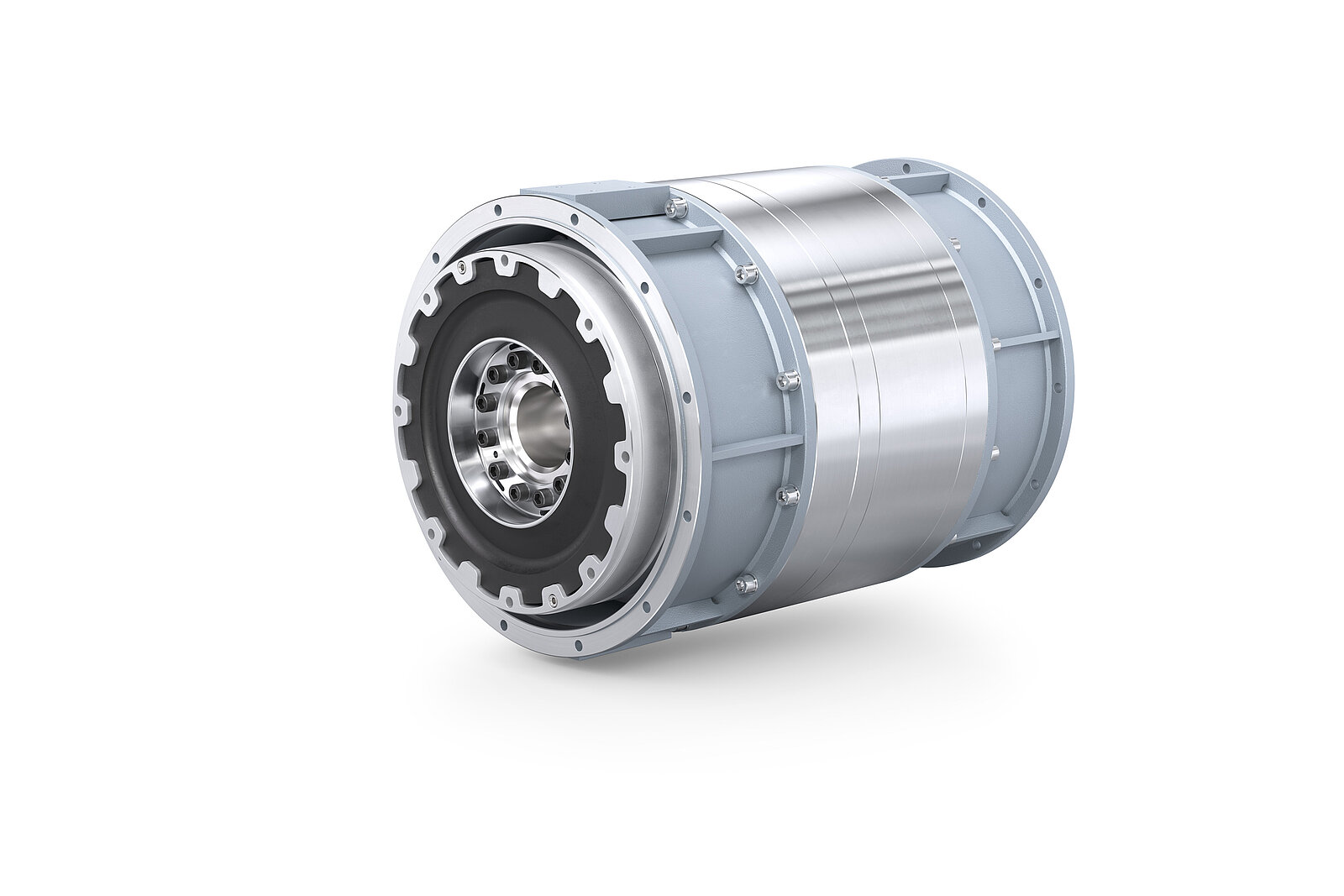
- Electric machine
- Mechanical integration
Batteries: Air-cooled or liquid-cooled, LFP, registry approved.
System commissioning performed by VULKAN.
- Compactness: For engine rooms with limited space.
- Robustness and reliability: For long-lasting performance, maintaining stability over time.
- Modularity: Achieved through the standardization of clutches, e-machines, and other hybrid components.
- Safety: State-of-the-art electrical design, meeting the highest industrial standards and incorporating the latest technologies.
- Customization: Can be configured in a variety of solutions by combining diesel engines from 500 kW to 1500 kW with appropriately sized e-motors to meet project requirements and customer needs.
- Adaptability: Suitable for both pleasure and commercial vessels.
- Batteries: Air-cooled or liquid-cooled, LFP, registry approved
- System commissioning performed by VULKAN.